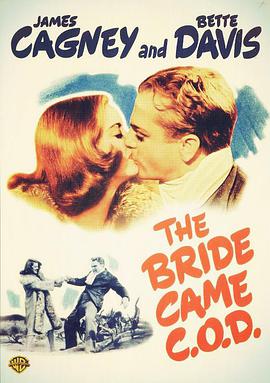
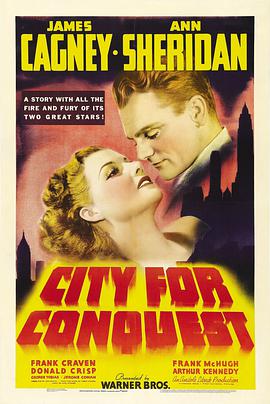
琼(贝蒂·戴维斯 Bette Davis 饰)是衔着金汤匙出生的千金小姐,她的生活虽然富足,但并不快乐,因为她缺少一样东西,那就是自由。一次偶然中,琼邂逅了名为艾伦(杰克·卡森 Jack Carson 饰)的乐队指挥,琼一下子被他的风度翩翩给吸引了,两人火速发生了关系,并且决定私奔结婚。
女儿的失踪令琼的父亲感到非常的着急,他找来了技术十分了得的飞机师史蒂夫(詹姆斯·卡格尼 James Cagney 饰),委托他驾驶飞机将自己的女儿带回德州。哪知道琼误以为史蒂夫是绑架犯,千方百计的想要从飞机上逃走,闹出了一连串的笑话。祸不单行,在沙漠上空,史蒂夫的飞机发生了故障,一行人被迫降落在了茫茫的沙海之中。
转自:
http://www.filmlinc.com/nyff/2010/views-from-the-avant-garde-friday-october-1/views-from-the-avant-garde-jean-marie-straub
“The end of paradise on earth.”—Jean-Marie Straub
The 33rd verse and last chant of “paradise” in Dante’s Divine Comedy. The film starts with verse 67, “O somma luce…” and continues to the end. “O Somma luce” recalls the first words uttered by Empedocles in Danièle Huillet and Jean-Marie Straub’s 1987 The Death of Empedocles—“O himmlisch Licht!…” (O heavenly light!). This extract from Hölderlin’s text is also inserted into their 1989 film Cézanne.
“O somma luce” invokes utopia, or better still “u-topos,” Dante, Holderlin, Cézanne… the camera movement, recalling Sisyphus, in the film’s long shots, suggests its difficulty.
In O somma luce, with Giorgio Passerone’s Dante and the verse that concluded the Divine Comedy, we find at the extremity of its possibilities, the almost happy speech of a man who has just left earthly paradise, who tries to fully realize the potential of his nature. Between the two we find the story of the world. The first Jean-Marie Straub film shot in HD.
So singular are the textual working methods of Straub-Huillet, and now Straub on his own, that it is hard to grasp how far reaching they are. Direction is a matter of words and speech, not emotions and action. Nothing happens at the edges, everything is at the core and shines from there alone.
During the rehearsals we sense a slow process by which ingredients (a text, actors, an intuition) progress towards cohesiveness. It is, forgive the comparison, like the kneading of dough. It is the assembling and working of something until it becomes something else… and, in this case, starts to shine. Actually it’s very simple, it’s just a question of opening up to the light material that has been sealed up. Here, the process of kneading is to bring to life and then reveal. The material that is worked on is speech. So it is speech that becomes visible—nothing else. “Logos” comes to the cinema.
The mise en scène of what words exactly?
The process of revealing, “phainestai” “phainomenon,” the phenomenon, is what take splace, what becomes visible to the eye.
Is “Straubie” Greece?
This mise en scène of speech, which goes beyond a close reading of the chosen text, is truly comes from a distant source.—Barbara Ulrich
Danny is a content truck driver, but his girl Peggy shows potential as a dancer and hopes he too can show ambition. Danny acquiesces and pursues boxing to please her, but the two begin to spend more time working than time together.
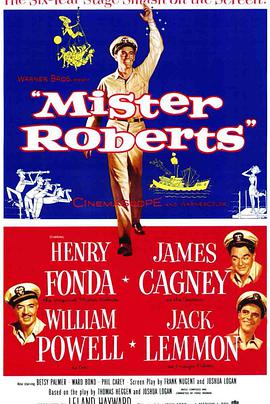
Shortly after the United States enters World War I in 1917, a Broadway actress agrees to let a naive soldier court her in order to impress his friends, but a real romance soon begins.
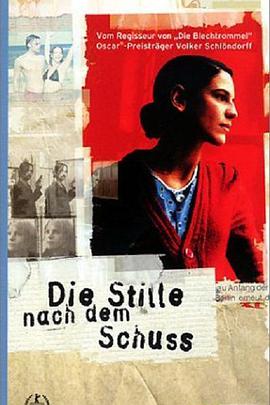
Die BRD in den 70er Jahren. Über die heitere Anarchie kommt Rita Vogt zum Terrorismus, verführt durch ihren Gerechtigkeitssinn und durch die Liebe zu Andi. Als sie das Scheitern der Bewegung erkennt, taucht sie in der DDR unter. Mit Hilfe der Staatsicherheit, personifiziert in Erwin Hull, beginnt für sie dort unter anderem Namen eine neue Existenz.
Rita führt sozusagen das normale Leben der Arbeiterklasse. Sie will ankommen, während ihre junge Kollegin Tatjana weg will, in den Westen. Zwischen beiden beginnt eine Freundschaft, der eine Fahndungsmeldung im Westfernsehen ein abruptes Ende setzt. Wieder muss Rita untertauchen. Mit einem neuen Namen in einer neuen Stadt scheint sie mehr Glück zu haben.
Rita lernt im Urlaub den Studenten Jochen kennen. Er will sie mit nach Moskau nehmen. Doch dann wird Rita von ihrer Vergangenheit eingeholt, es ist das Jahr 1989 - die Mauer fällt, die DDR hört auf zu bestehen...
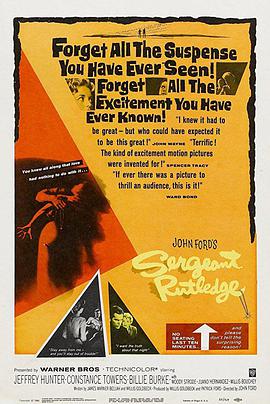
Respected black cavalry Sergeant Brax Rutledge stands court-martial for raping and killing a white woman and murdering her father, his superior officer.
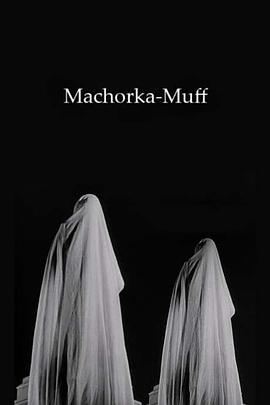
Straub-Huillet’s adaptation of Heinrich Böll’s biting satire Bonn Diary presents the reflections of a reactivated officer who is summon ed to the West German capital by the Ministry of Defense to establish an Academy for Military Memories. Straub considered his film to be an intervention against German rearmament in the Adenauer era: "Machorka-Muff is the story of a rape, the rape of a country on which an army has been imposed, a country which would have been happier without one."
In "Machorka-Muff," Mr. Straub, employing the cold, somewhat expressionistic but always loquacious approach of his other films, comes closest to underlining the almost subliminal irony of his themes. He briefly outlines, through the performance of Colonel Machorka-Muff, a former Nazi who is reinstated in the Adenauer regime, the unchanging thinking of the Nazi and/or the military mind. As the colonel of the title, Dr. Johannes Eckhardt is properly cold and convincing as the believer in the rights of the soldier. Although it is the shortest and earliest of Mr. Straub's films, it is both the most lucid of his works and the most clearly indicative of his potential as an imaginative filmmaker.