Robert Tucker, a sorrowful, solitary man, given to bouts of weeping, tries to balance his life caring for his aging mother, his Catholicism, his homosexuality, and his dull job. One night, after his mother has gone to bed, he dons leather and heads for a private club. He telephones a tattoo artist with a special request. He goes to confession, accusing himself of despairing. He cries out during a nightmare, waking his mother. "You're a good boy," she's told him. He prays the Stations of the Cross, and he lives out his own sorrowful mysteries.
In sepia tones, the film moves back and forth among three periods in Robert Tucker's life: he's an old man, near death, in a nursing home at Christmas time he's in middle age caring for his cheerful but dying mother he's a lad at Catholic school, practicing his catechism, going to confession for the first time, receiving the Eucharist, surrounded by the singing of a children's choir. In middle age, he looks through his scrapbook of photographs of muscular men he recalls lovers and his mother's cremation. A nurse sits beside him on his last night in his last breath, he reaches forward and back..
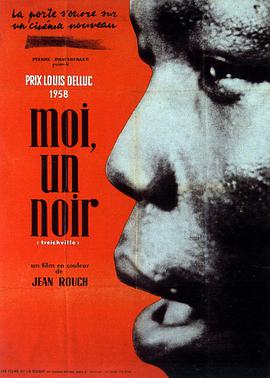
本片记录了西部非洲的乡下青年到城市打工的经历。许多尼日利亚青年离开位于内陆的家乡来到沿海国家象牙海岸打工,许多人在首都阿比让的平民区落脚。本片主人公是一位仿照美国电影明星取名爱德华·罗宾逊的年轻人,他在摄影机前讲述自己及其同伴的故事。 The film depicts an ordinary week in the lives of men and women from Niger who have migrated to Abidjan, Cote D'Ivoire for work. After a short introduction by Rouch, "Edward G. Robinson"-Omarou Ganda, who like the film's other subject-collaborators plays himself under the name of a Western movie star-takes over the film's narration, recreating dialogue and providing freewheeling commentary on his experiences.
A party of archaeologists discovers the remnants of a mutant five-millennia-old Sumerian civilization living beneath a glacier atop a mountain in Mesopotamia.
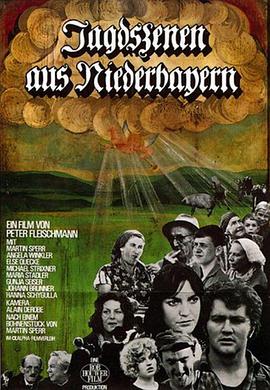
ynopsis from Time Out Film Guide: Between the seemingly idyllic opening and closing scenes depicting a rural community, first at church, then at the village festival, Fleischmann attacks that community's prejudices and ignorance without remorse. His very precisely observed portrait of Bavarian life begins with little more than a display of the villagers' constant ribbing, bawdy humour, continuous gossip, and more than a hint of their slow-wittedness. With the return of a young man, their idle malice and childish clowning, always on the edge of unpleasantness, receive some focus: quite without foundation, the lad is victimised as a homosexual. The crippling conformity of their ingrained conservatism leads the villagers to reject anything 'different': a young widow is ostracised, more for her crippled lover and idiot son than her morals a teacher is frozen out because she's educated the casual destruction of the young 'homosexual' is given no more thought than the cutting up of a pig. Not Germany in the ཚs but the ྂs nevertheless the political parallels are clear. An impressive film.
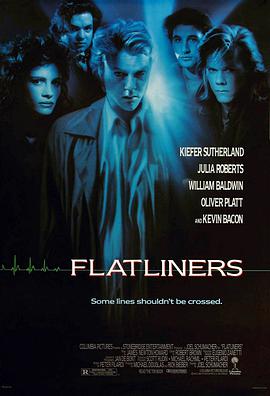
几个芝加哥大学附属医院高材生,在好奇心的驱使下,策划了一场探索死亡奥秘的疯狂实验。他们轮流躺在手术室里进入死亡状态,再由其他守护的同学将自己救活。这场惊险又刺激的死亡穿梭,在一个漆黑的深夜里一步步的开始了。
第一个进行测试的纳尔逊(基弗·萨瑟兰 Kiefer Sutherland 饰)在“死”去之后,遇见了因他的侮辱而死去的男孩。死而复生后的纳尔逊,虽然各种感官都变得更加敏锐和灵敏,却陷入深深的梦魇之中;接受实验的第二个人是好色的乔(威廉·鲍德温 William Baldwin 饰),他见到了各种色情场面,并且遇见了曾虐待过的女孩;紧接着,戴维(凯文·贝肯 Kevin Bacon 饰)也接受了实验,他则将死亡实验延迟到了两分钟;女学生蕾切尔(朱莉娅·罗伯茨 Julia Roberts 饰)更是在死亡时间里,重温了父亲自杀的经过。在体验过死亡世界之后,那些挥之不去的往日记忆开始无孔不入的侵占他们的一切。