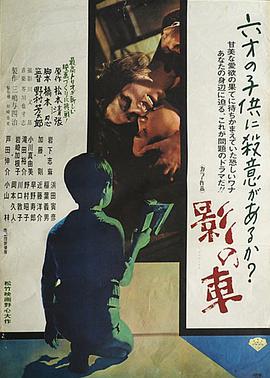
杰克(迈克尔·基顿 Michael Keaton 饰)是一位功成名就的音乐家,在事业上取得了硕大的成功,这也就意味着,他牺牲了大部分陪伴家人的时间,杰克的儿子查理(约瑟夫·克罗斯 Joseph Cross 饰)对此一直感到闷闷不乐。某日,杰克回到家,和查理一起堆了一个大雪人,杰克送给查理一只口琴,父子之间许下承诺。
圣诞节将至,杰克决心和家人们共同度过这个温馨的节日,然而,就在他驱车回家的路上,发生了严重的车祸,杰克亦因此丧命。失去父亲的悲痛和绝望笼罩着查理,整整一年,查理的家庭都生活在悲怆而又压抑的气氛中。一晃眼,圣诞节又到了,查理想起了和父亲的约定,他堆了一个雪人,然后吹响了父亲送给他的口琴,希望父亲能够如同承诺的那样,再度回到他的身旁。
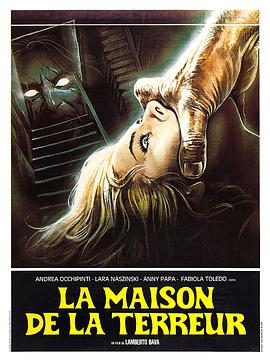
A killer stalks a composer staying at a posh Tuscany villa while writing the score to a horror film which has an incriminating clue to the killer's identity.
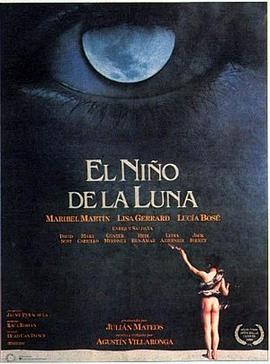
Since ancient times, a tribe on the African continent has been prophesying that a white boy will arrive to be their god: the Son of the Moon. David, a 12-year-old orphan who lives in Europe, learns about the prophecy and believes that he is the chosen child and that destiny must be fulfilled at any cost. Before David can fulfill his prophecy he must escape the heavily guarded scientific organization that has adopted him. David's strange behavior and the fact that he possesses extrasensory perception, has attracted the attention of an organization researching so-called "prodigious beings" in the occult tradition. David soon discovers that their goal is to channel the moon's energy into a child yet to be born, robbing him of his rightful place as the Son of the Moon. Two women, Victoria, a member of the center, and Georgina, the future mother of the supposed moonchild, will help David fulfill his destiny. After several attempts David manages to escape the center and undergoes a series of new experiences: love, adventure, supernatural events and even death. David is relentlessly pursued, pushing him further towards his goal, towards Africa where his fate awaits him.
Each night in Paris, hundreds of men and women anonymously use telephone lines that date from the German Occupation and are no longer listed to talk to each other, to love each other. These people, shipwrecked lovers, are dying to love, to escape the abyss of solitude...
Adult brothers Mark and Colin Pollock still live with their parents Frank and Mavis Pollock in a small apartment in the projects of London's east end in what is a collective depressed and unhappy existence. The three men of the household are all on the dole, each doing little to find gainful employment. Between the brothers, Mark is the smart aleck, who calls his parents by their given names to irk them, and who hangs out with a bunch of hooligans as he refers to himself and his friends, such as a skinhead named Coxy. Although never medically diagnosed as such, Colin is seemingly emotionally slow. Colin likes to hang out with Mark and his friends in his want to be accepted, especially as Mark tells him that a neighborhood girl named Hayley is interested him. The family rarely socializes with Mavis' sister and brother-in-law, Barbara and John, who live a middle to upper middle class and seemingly perfect existence in the suburbs of Chigwell. Although not telling them to their face, John dislikes his relations by marriage, believing especially Mark to be brash and trashy. A unilateral act by Barbara leads to many issues within the extended family coming to the surface, most specifically the true happiness of the marriage between Barbara and John, and what Colin is truly looking for to be happy in life.
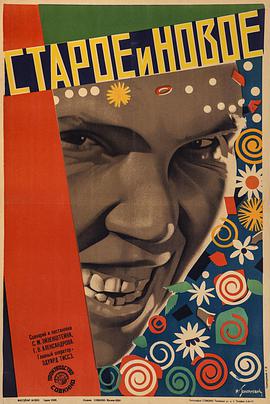
Due to some common interests between German and Russian aristocracy ( the Russians even had aristocrats in their past not to mention they had an Empress called Catherine the Great, as great as this German count's heiresses… ), it is not strange that this Teutonic count has understood and even enjoyed Herr S. M. Eisenstein's "Staroye I Novoye".
It is not very usual that for the aristocracy to enjoy Bolshevist films full of proletarian demands that put private property at risk or as it happens in this case, a film about the Communist Party's policy on the subject of the collectivization of the Soviet agriculture. Normally this would be perfect gibberish for this German count, but thanks to Herr Eisenstein 's greatness and directorial talent, the hardships of the heroine of the film, Dame Marfa ( Dame Marfa Lapkina ) breached even the thick aristocratic Schloss walls.
And that's one of the first remarkable aspects of this oeuvre in spite of the political subject of the film, the powerful images and lyricism ( astonishing and beautiful shot compositions ), especially during the first part of the movie, preserve the artistic merits entirely while serving a propaganda purpose. The second remarkable aspect of the film is the dichotomy between the old and new, the fight to improve the lot of Dame Marfa and her countrymen. There are many discussions because it is not easy even in Russia to change ancient and conservative customs. There are superb metaphors and social criticism ( illiteracy, bureaucracy, religiosity ) which perfectly fit the film, and last but not least, "Staroye I Novoye", is a kind of archaic documentary about ancient customs established deeply in old Russia, those ones that our heroine must fight against. And there is also a lot about agriculture ( very enlightening for this German count), especially about harvesting and how to fatten Russian cows or pigs ( literally, no pun here… ).
Herr Eisenstein had to bear during the last era of his film career, unbelievable censorship and mutilation of his work, as happens with "Staroye I Novoye". The film was reedited and Eisenstein accused of sympathizing with Trostky's policies but fortunately the film was restored and showed by the German-frenchified t.v. channel "ARTE", natürlich!, including an evocative music score by Herr Taras Bujewski, that fits superbly Herr Eisenstein primal artistic interests.
And now, if you'll allow me, I must temporarily take my leave because this German Count must buy a tractor for one of his Teutonic heiress.